
Your website might read perfectly well to a human visitor and still be almost useless to an AI tool trying to decide whether to recommend your clinic. That’s not a contradiction. It’s because a person reading your homepage and an AI model scanning it for facts to repeat are looking for two different things.
Here’s the difference. what it actually looks like to fix it. website copy AI can’t read also helps clarify the practical next step for patients and clinic owners.
Why “Reads Well” and “Quotable” Are Not the Same Thing
A human visitor reads your homepage in context. They scroll, they get a general impression, warm, professional, trustworthy. that impression is often enough to keep them reading or pick up the phone.
An AI tool doesn’t work that way. When it’s building an answer, it often pulls a single passage, a sentence or two, out of your page, with none of the surrounding context. That passage has to make sense and carry useful information entirely on its own, because that’s all the AI is working with in that moment.
This means a paragraph that flows nicely as part of a longer page can be nearly useless in isolation. “We’ve been proudly serving the community for years with a commitment to excellence” reads fine in context and says almost nothing on its own. There’s no fact in it an AI model could confidently repeat to answer a patient’s actual question.
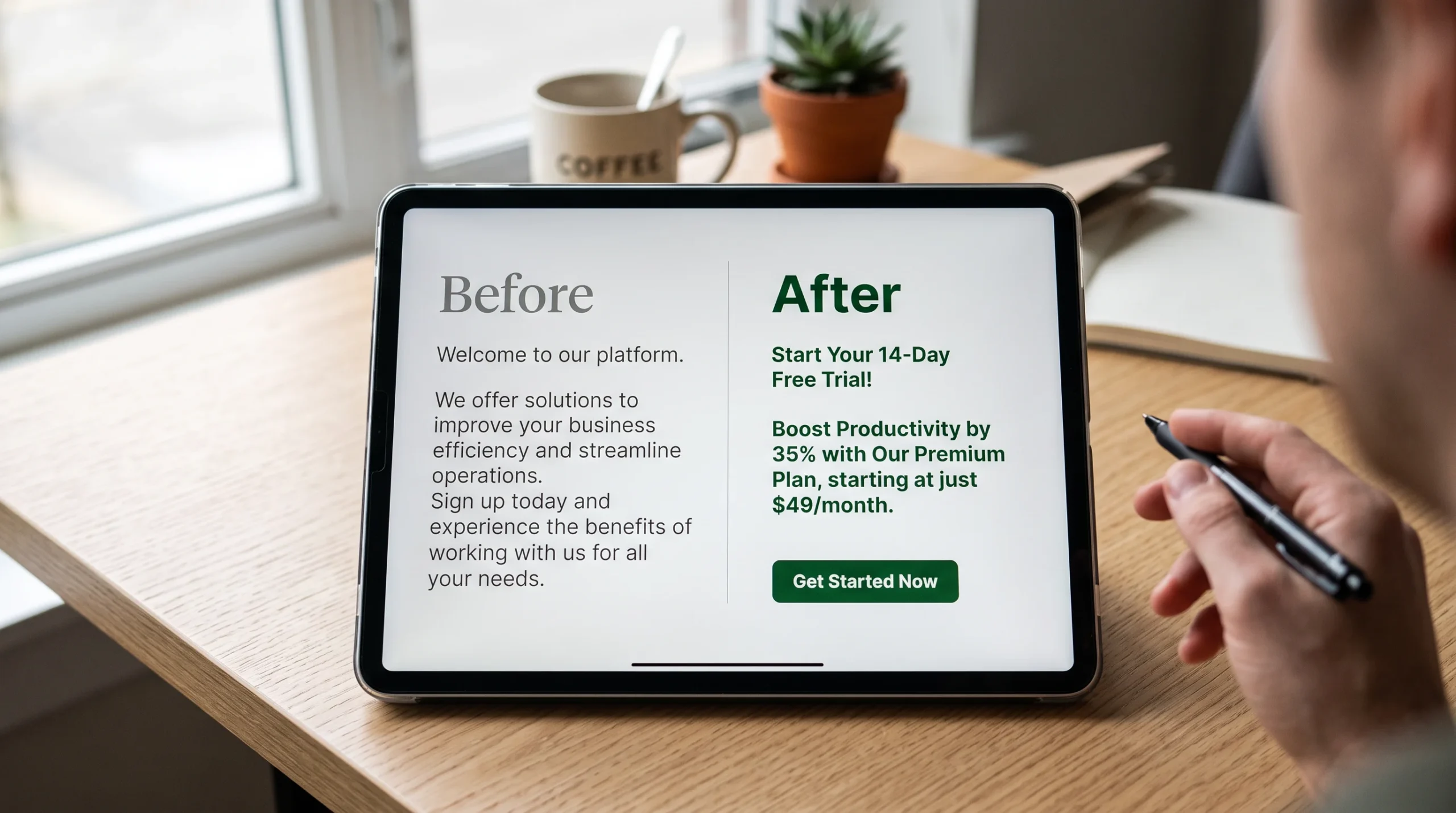
A Before-and-After Example
Here’s a fictional example to make this concrete. Imagine a general dentistry page with this paragraph:
Before: “At our clinic, we believe every patient deserves quality, affordable dental care in a comfortable environment. Our experienced team is dedicated to your oral health and overall well-being, using the latest technology to ensure the best possible results.”
Read that as a single, isolated sentence, cut off from the rest of the page. What could an AI tool actually repeat from it? Not much. “Quality,” “affordable,” “experienced,” and “latest technology” are all vague enough to apply to nearly any dental practice in the country. There’s no specific fact in there at all.
After: “Our general dentistry visits start at $89 for a cleaning and exam. most patients see a hygienist within one week of booking. We use digital X-rays, which use significantly less radiation than older film X-rays. same-day appointments are available for urgent issues.”
Notice what changed. There’s a real price. A real wait-time expectation. A specific technology named with a specific, factual reason it matters. A concrete same-day-appointment detail. Every sentence in that version could be lifted out on its own and still mean something useful to a patient asking a specific question.
The Four Changes That Make the Biggest Difference
Turn headings into real questions. “Pricing” tells an AI tool almost nothing about what’s underneath it. “How much does a dental cleaning cost?” matches how a patient would actually ask. makes it far more likely that section gets found and used at all.
Answer within the first two sentences. Once a section is found, it only has a moment to be useful. Lead with the actual answer, then explain further if needed, rather than building up to the point.
Replace vague words with specific facts. “Affordable” isn’t a fact an AI can repeat. “$89” is. “Experienced” isn’t specific. “12 years in practice, focused on family and cosmetic dentistry” is.
Make sure every paragraph could stand alone. A useful test: cover the rest of the page and read just that one paragraph. Does it still answer something clearly, or does it depend on context from somewhere else on the page? If it depends on context, it’s a strong candidate for rewriting.
A Quick Self-Test for Your Own Website

Open your own homepage or a key service page and try this: pick any single paragraph, cover the rest of the page. read just that one section by itself. Ask honestly, does this paragraph contain a specific, useful fact, or does it mostly rely on tone and general reassurance?
Do this for three or four paragraphs across your site. If most of them lean heavily on words like “quality,” “trusted,” “experienced,” or “affordable” without a specific number or detail attached, that’s a clear, fixable pattern, not a sign anything is fundamentally wrong with your website.
Frequently Asked Questions
Does this mean I need to remove all the warm, reassuring language from my website?
No. Tone still matters for human visitors. a page that reads like a spec sheet isn’t necessarily better. The goal is adding specific, factual detail alongside the warmth, not stripping the warmth out entirely.
How many pages on my website actually need this kind of rewrite?
Start with the pages most likely to answer a patient’s actual question: your homepage, your services or pricing page. any FAQ page. Those carry the most weight for both human visitors and AI tools deciding what to quote.
Can I do this rewrite myself, or does it require a professional writer?
It’s possible to do it yourself using the before-and-after pattern in this post as a guide. Many clinic owners find it faster and more consistent to have someone experienced with this specific kind of writing handle it, especially across an entire website, since the pattern needs to hold on every page, not just one.
Related Reading
- Your Next Patient Might Be Asking ChatGPT, Not Google — Is Your Clinic Ready?
- Google Business Profile Mistakes That Make AI Skip Your Clinic
- our web design services
- Schema.org’s getting started guide
Want Your Copy Checked?
If you’re not sure whether your own website copy would pass this test, Maple Web Agency can review it with you, page by page. show you exactly where to add the kind of specific detail AI tools and patients both respond to, no obligation attached.